FMP – Opening

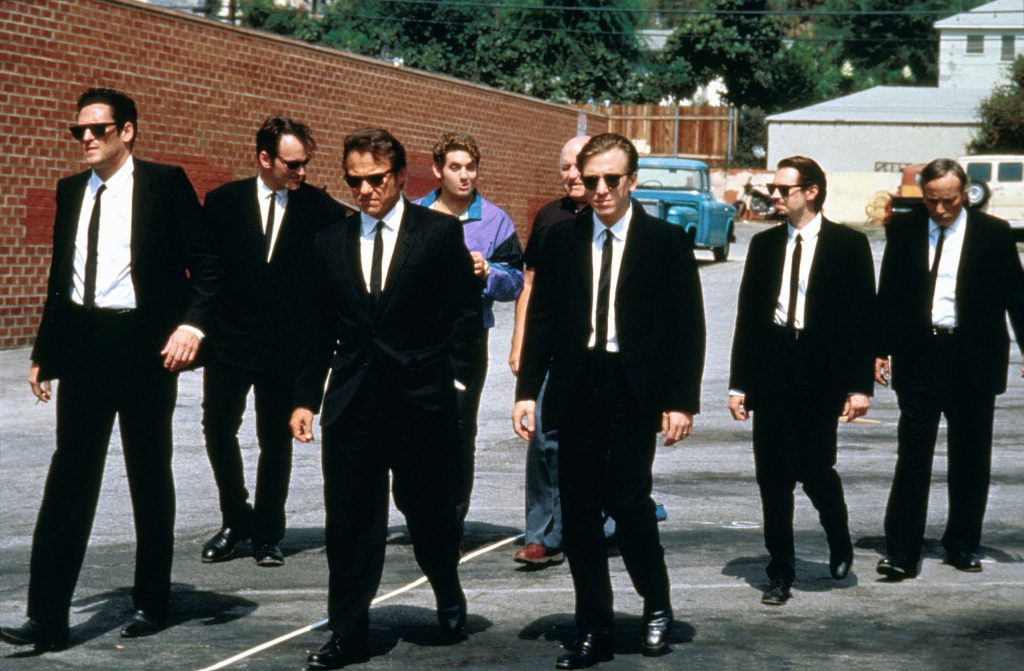
Reservoir Dogs (1992)

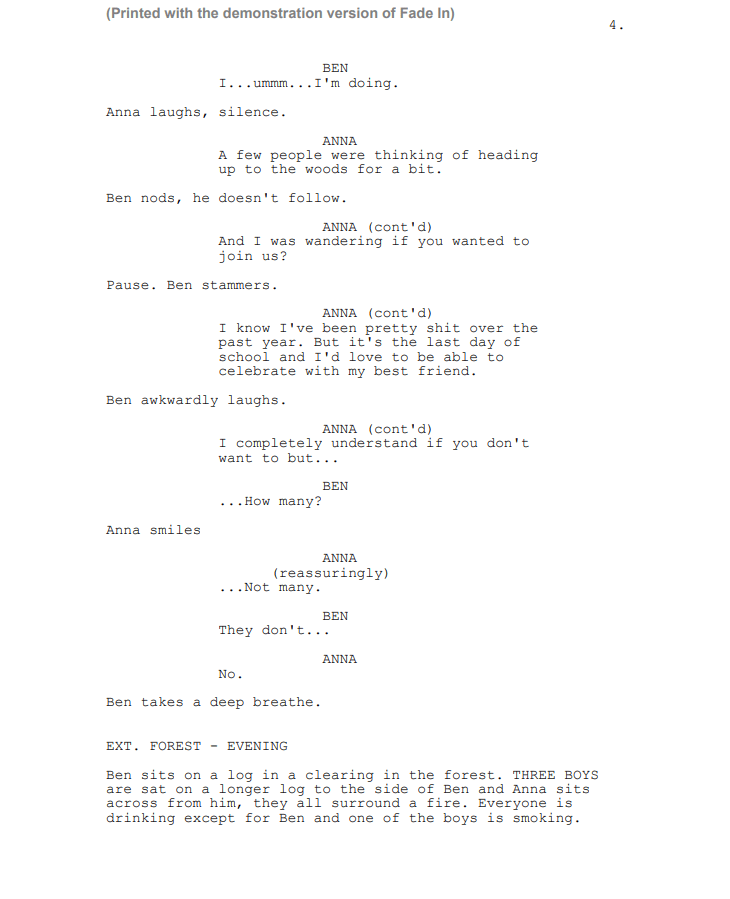
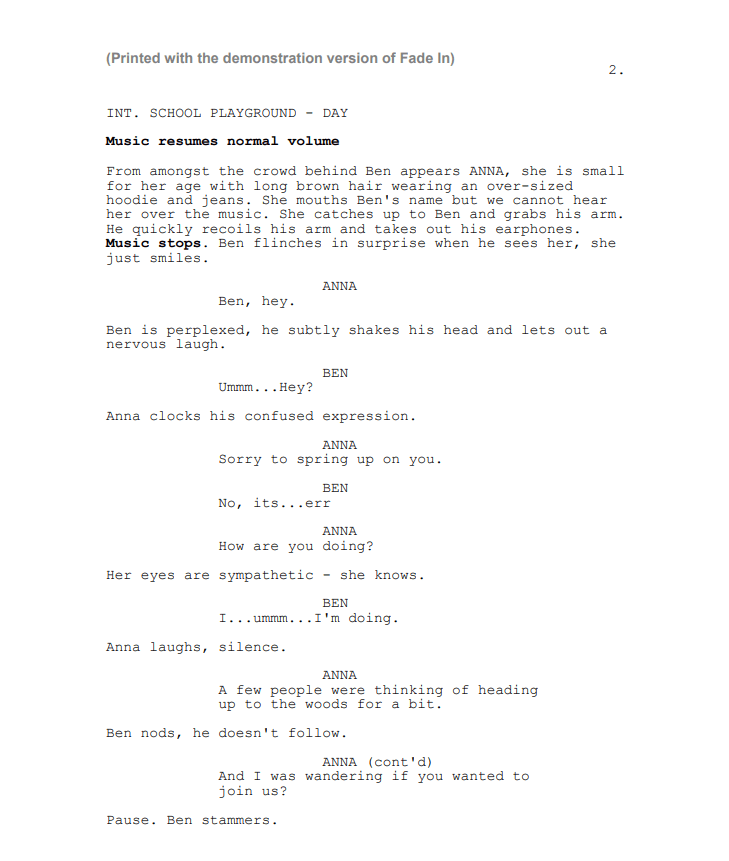
Out of all the parts of my FMP script so far, the opening scene has changed the most, being considerably different in every new revision. In this blog post I’m going to briefly analyse all of my different opening scenes and talk you through my thought processes.

Before we can do that though, make sure you have read the two previous blog posts on my FMP so that you have all the context needed to understand what I’m talking about.

Developing Characters: https://taranfieldyr1fmp.movie.blog/2020/05/20/fmp-characters/

Plot Summary: https://taranfieldyr1fmp.movie.blog/2020/05/21/fmp-plot-summary/

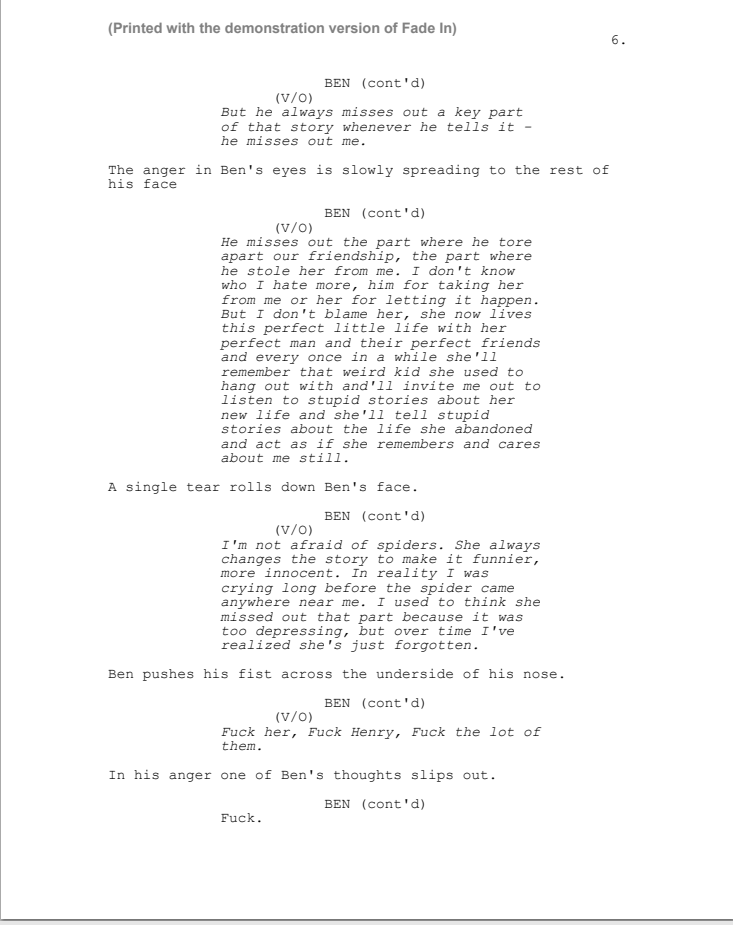
Draft One
Analysis

Pros

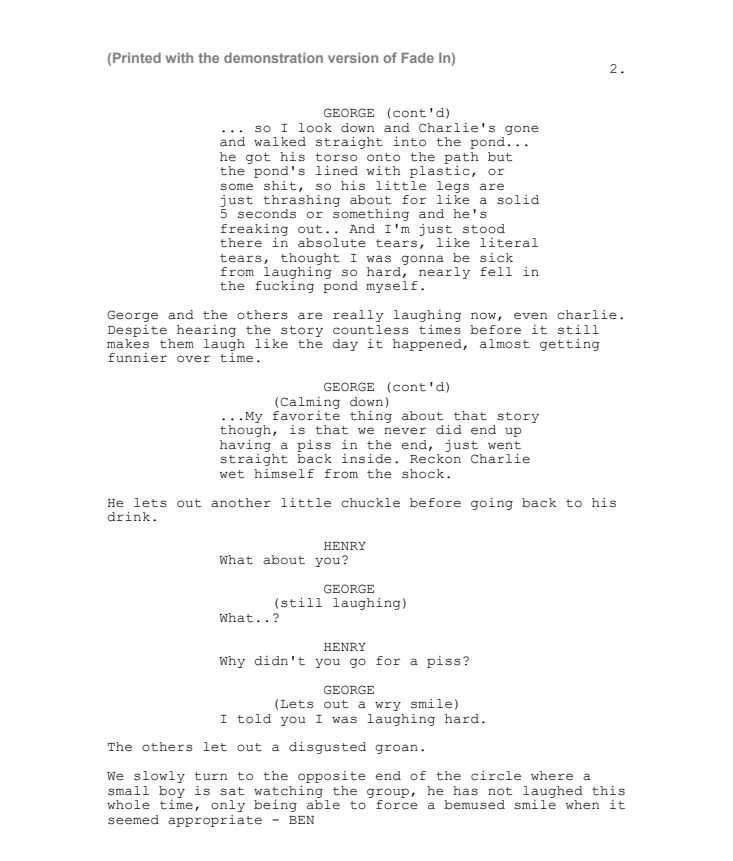
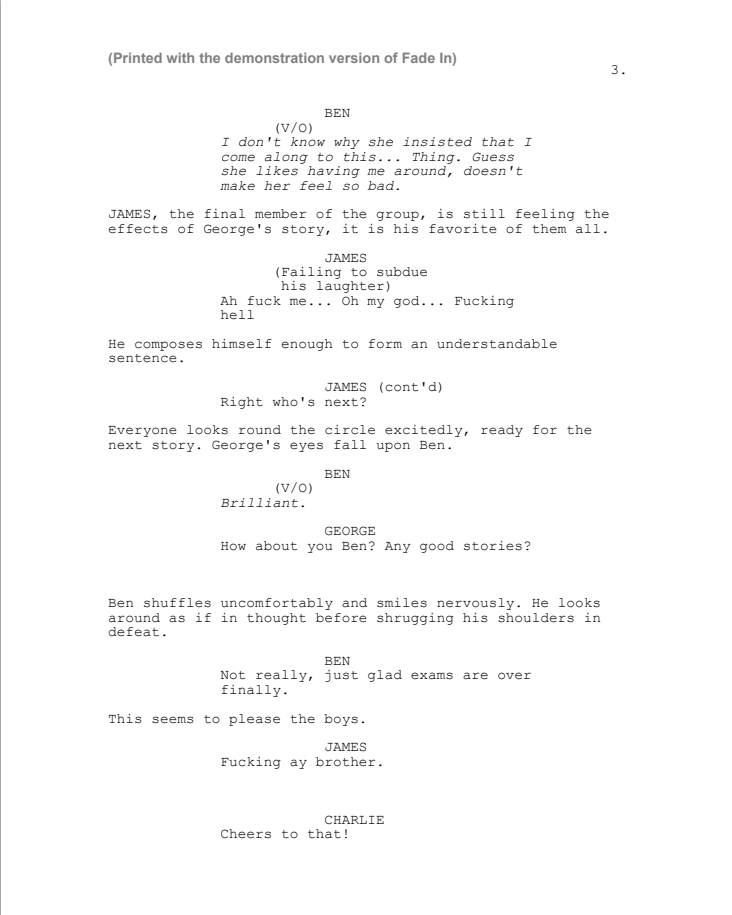
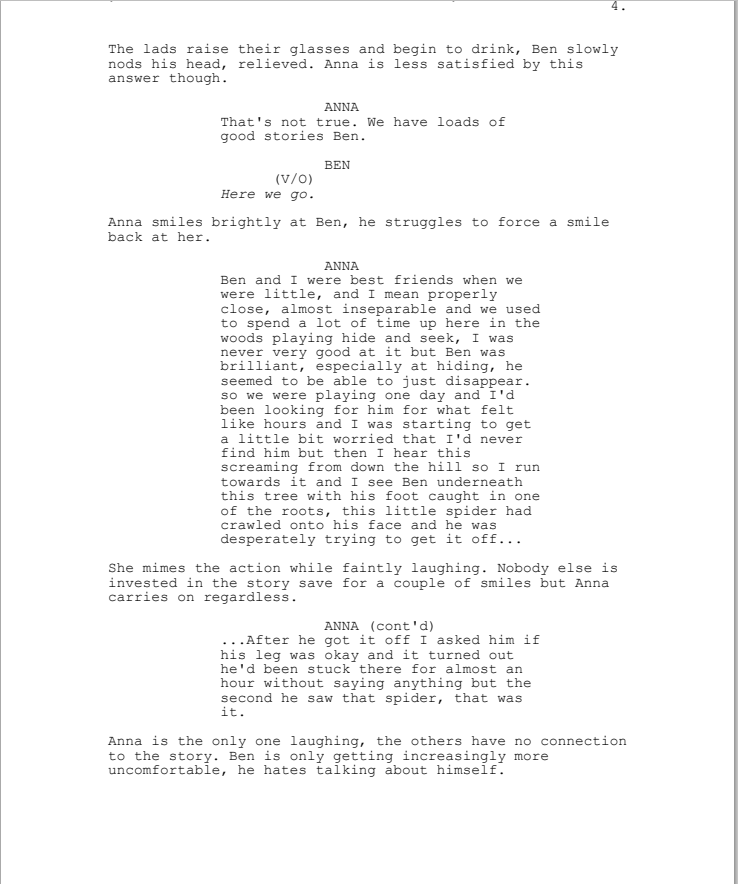
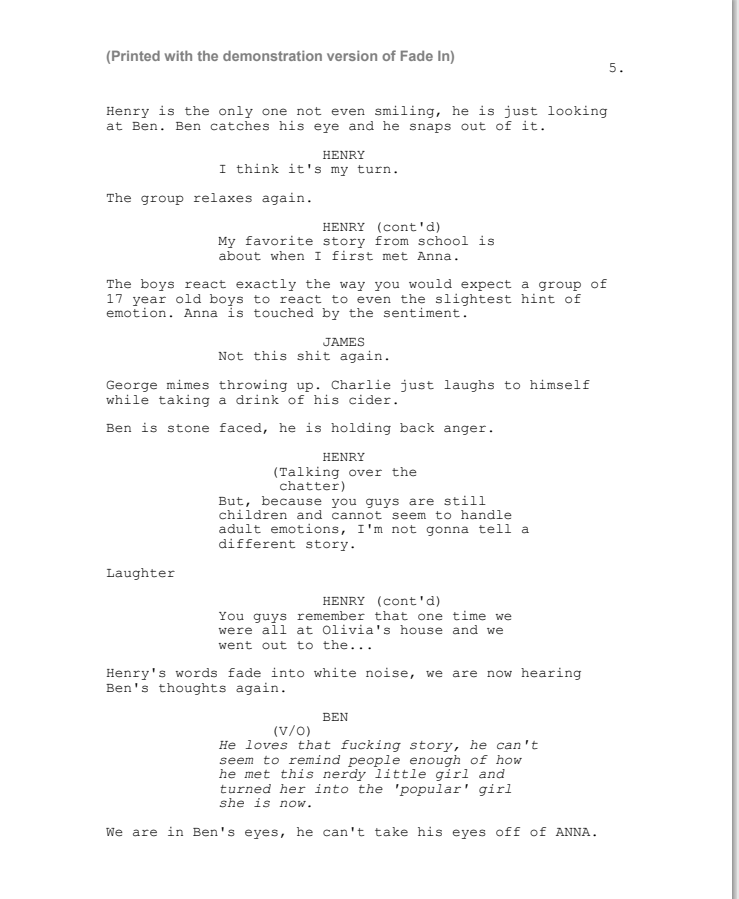
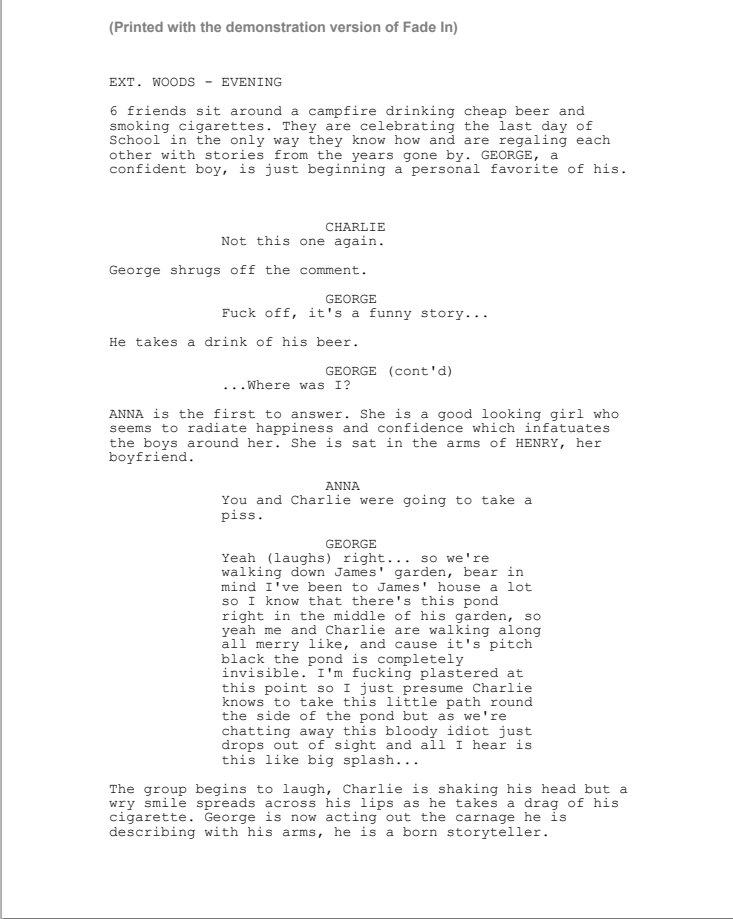
This first draft of the film’s opening shows how much the story has developed over time as very few of the features I outlined in past blog posts come up in this opening.

In this first draft, the difference between Ben and Anna’s new friends was the key focus which is why I started by introducing two of the side characters and how they interacted with each other. I hoped, by contrasting this with how Ben interacts with the rest of the group it would quickly highlight how everyone thought he was a bit of an outcast and a weirdo.

I also used this draft as a way of practicing my writing, seeing how well I could write a natural conversation. This is why the initial conversation is so long; I was never intending on keeping it that long in the film I just wanted to practice writing conversations. To help keep it natural, the story in the script is actually a true story from my life and the conversation is based upon conversations I have had with my friends when telling that story, in future drafts of this campfire scene, all of the conversations between the teenagers is modelled around real conversations because I figured that was the best way to make it feel real, if it actually is.
Memento (2000)

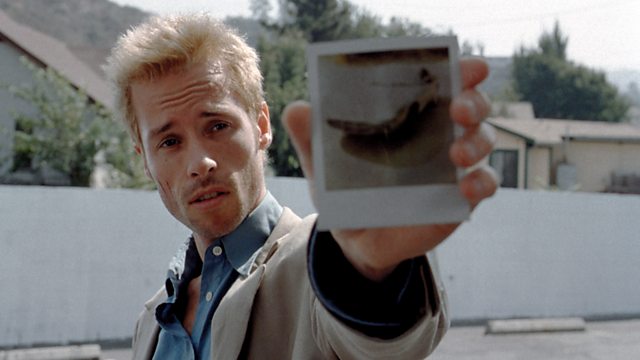
Me and Ryan made the decision to have Ben narrate the conversation through a voice over. We realized that a number of films and tv shows depicting mentally ill people such as American Psycho, Memento and You, utilize this narrative devise and thought it would work really well for our film, allowing us to explore Ben’s character on a much deeper level.

Changes needed

I quickly realized this would not work as an intro because I couldn’t afford to give so much screen time to characters who play no part in the central narrative. I also realized that introducing the characters this way round made Ben very unlikable because I was directly comparing him to inherently likable characters.

And that was another problem, the story is meant to be told from Ben’s point of view and Ben doesn’t like Anna’s friends. So by allowing the audience to form a positive opinion of Anna’s friends it completely shatters their trust in the narrator which would negatively affect the entire film.

I also decided that I wanted to start slightly before the campfire scene so that I could introduce Ben and Anna separately from the larger group as they are the two central characters and I needed the audience to care about their relationship.

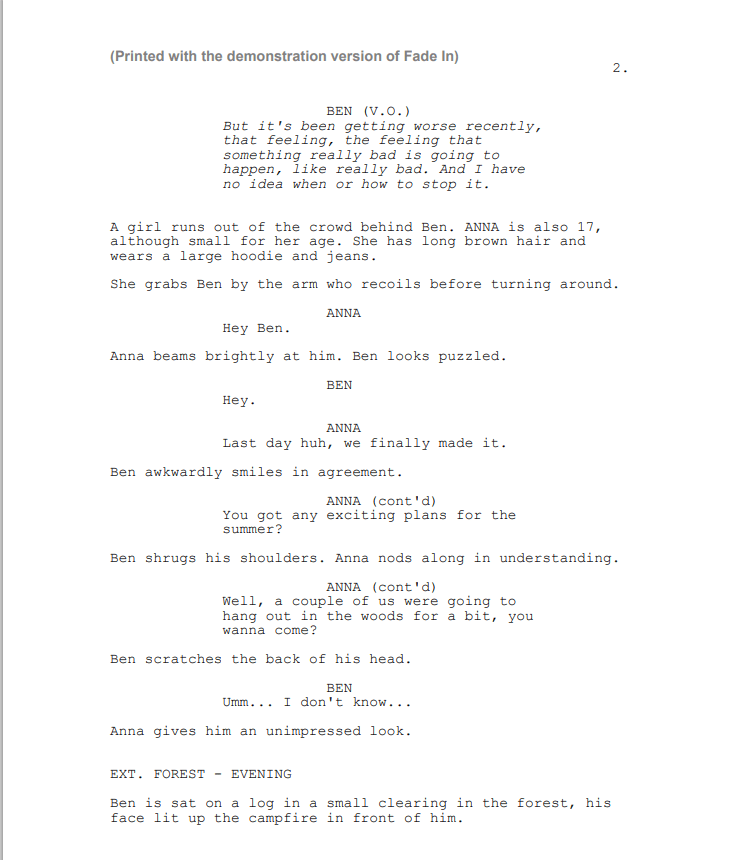
Draft Two
Analysis

Pros

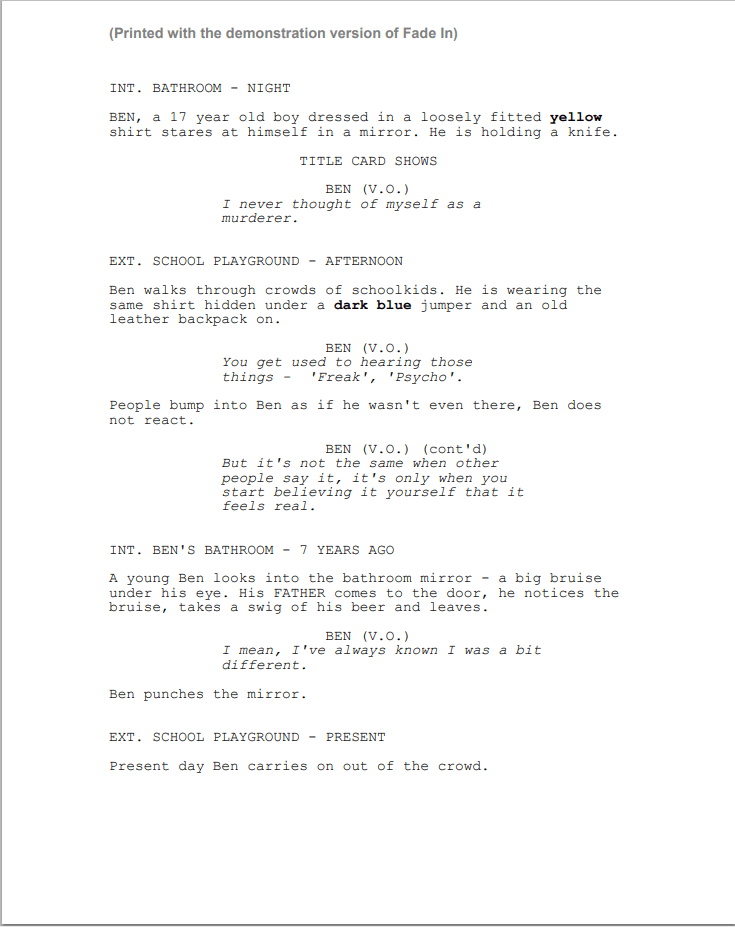
I actually really like this intro from a structural point of view. After finishing draft one I spent some time further developing my idea and decided I needed to put a lot more emphasis on the murder (or lack there of) as it is the dramatic climax of the film.

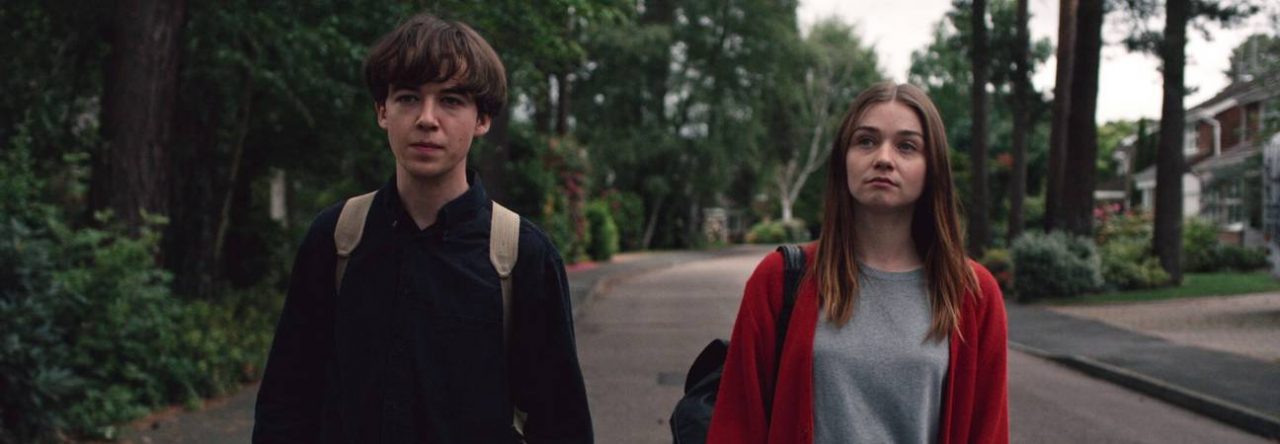
I decided I wanted to show Ben having visions of the murder throughout the film as I loved the way The End of the F***ing World used a similar devise. But when I first came up with the idea I only planned on those visions starting after Ben met Henry.

The great Alfred Hitchcock played a big part in me deciding to open with one of Ben’s visions as my intro was written as a direct response to watching his interview on creating tension.

So I guess in draft 2, Ben becomes Hitchcock’s bomb. By making the audience think that Ben is going to kill someone it creates a sense of anticipation which steadily grows as Ben gets closer and closer to the scene shown in the beginning. I was absolutely buzzing when Hitchcock ended his lesson by saying ‘The bomb must never go off’ because I had already made the decision very early on that Ben would never actually carry out the murder so it was nice to hear that my instinct is in the keeping with Mr Hitchcock’s.

I also really liked the opening line, I never thought of myself as a murderer because it, again, feeds into that sense of anticipation. It’s actually a bit of a red herring; by putting that line over the top of the image of Ben with a knife is comes across as if he we are hearing him after he has carried out the murder but in actual fact we are hearing him on the last day of school, commenting on the decline of his mental health.

In terms of introducing Ben’s character its instantly better because I actually introduce him first, making it clear he is the protagonist and making it clear that we will be hearing his inner dialogue throughout the film. The image of his walking through the crowd of schoolkids is just a visual metaphor for how he feels invisible and isn’t very popular, which I quite like.

You can probably tell there is a thing about mirrors in this second draft; we open with a shot of Ben looking at himself in the mirror and we see Ben looking at himself in the mirror as a young boy. This is because there is a strong theme of reflection in the film; Ben begins the film with a very skewed view of himself and he can only accomplish his need by properly reflecting on his past. I think this visual metaphor is especially effective in the opening shot.

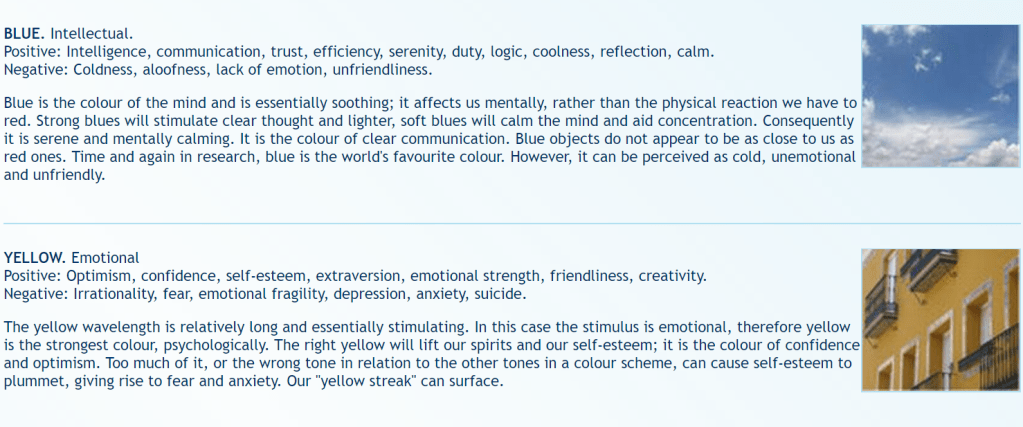
Another visual metaphor is Ben’s shirt. I put emphasis on Ben’s shirt being yellow as that colour represents mental illness and when Ben is preparing to kill Henry he is a victim of mental illness. By covering the shirt with a jumper in the beginning, it shows how Ben puts on a protective layer to try to hide this illness from the rest of the world. That protective layer is to remove himself from the world and become very cold to the people around him, hence the dark blue jumper. It’s a bit pretentious but you can see what I was going for.
Psychological properties of colour

The other main aspect of this new draft is Anna and Ben’s relationship. My aim was to make their dialogue seem very real to how old friends would talk for the first time in a while.

Changes needed

The biggest problem I had with this draft is that the opening monologue is way too on the nose, I continued to have this issue into future drafts but the problem really started here.

The flashback to Ben as a child was completely unnecessary for two main reasons: I could introduce the fact Ben’s father is abusive in a more subtle manner and also that brief scene is so impracticable as myself and Ryan would have to get two more actors just for one ten second flashback.

Draft Three
Analysis

Pros

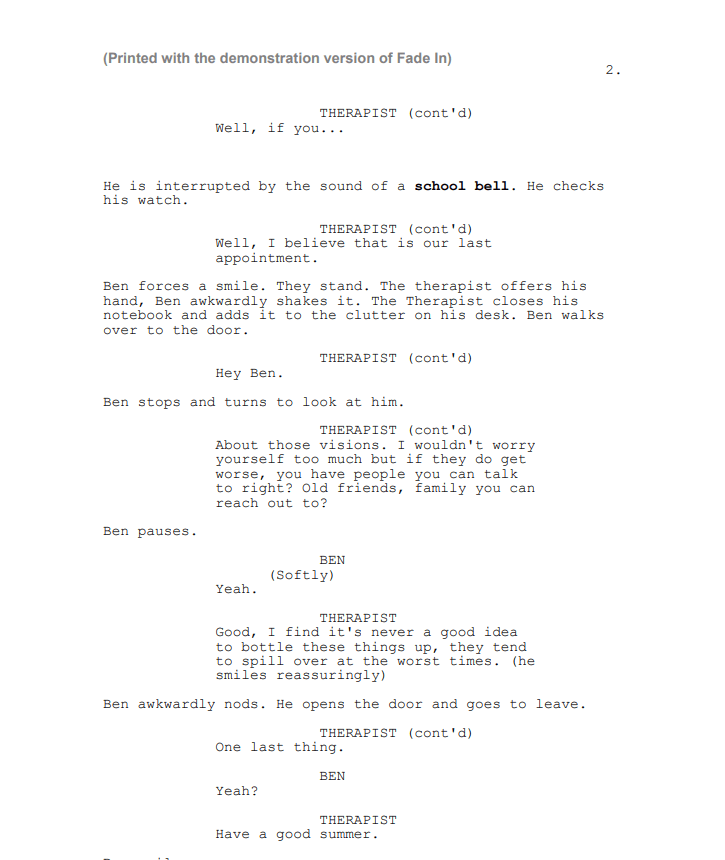
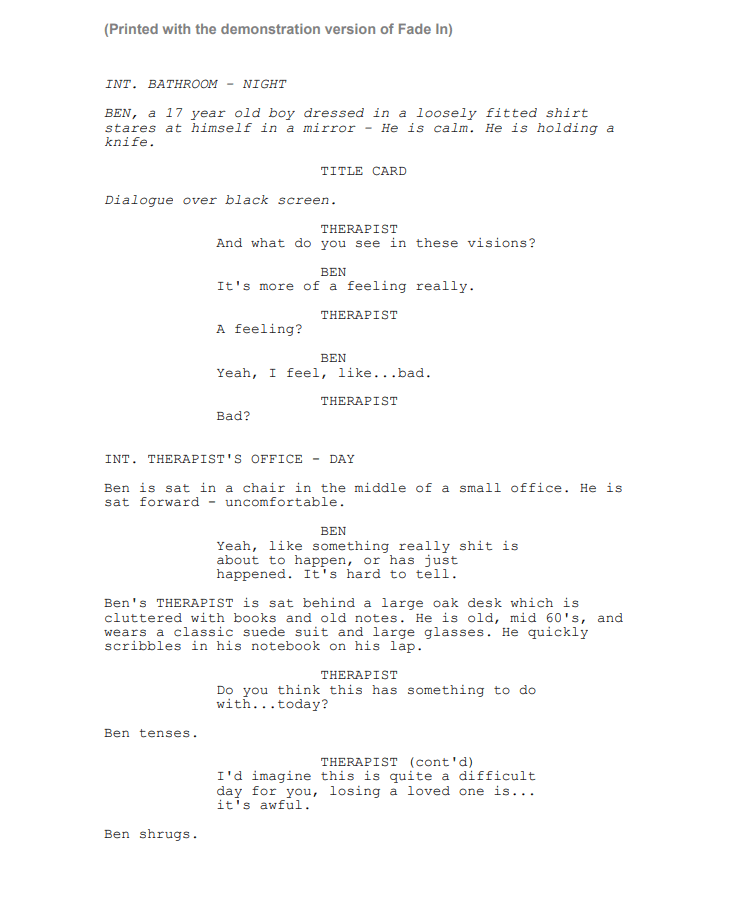
Simply from a narrative point of view, this is my favorite draft in terms of its opening. I kept in all the stuff with the vision at the start which I really like but chose to add a scene with Ben’s therapist. Which is loosely inspired by Good Will Hunting and I Am Not Okay With This.
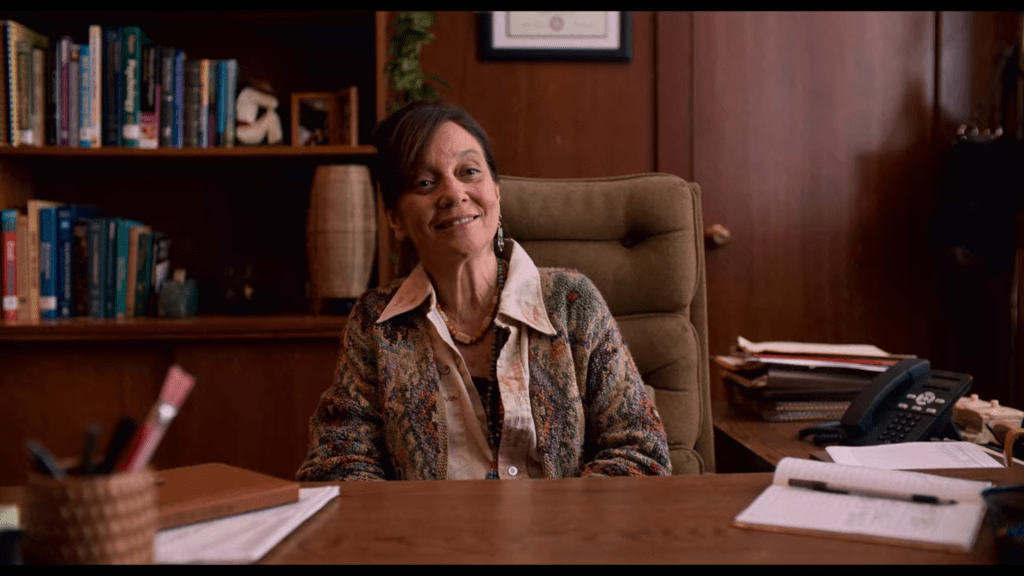
I Am Not Okay With This (2020)

The purpose of the therapy scene is to find a new way of showing Ben to be mentally unwell to avoid the long monologue from draft two.

Pretty much every line in this scene is exposition: Ben is mentally unwell, something bad is going to happen at the end of the film, Ben has lost a loved one, it is the anniversary of their death, it is the last day of school, Ben has no real support system in his personal life, etc. It is a lot of exposition for such a short scene but by hiding it in a conversation I feel it is a bit more engaging.

It was in this draft that I decided the death of Ben’s mother needed to take a central part in this story compared to just another part of Ben’s character. To bring it fully into the story I made the decision to have the day of the film is set be the anniversary of her death, I feel this was a good decision as it adds a lot more emotion to the story and offers a good explanation for Ben being particularly unstable.

Of course, adding this extra weight to the Mother narrative meant I had to rewrite Ben and Anna’s first conversation and I was actually pretty happy with how it came out and I’d say I utilized sub-text quite well.

Changes needed

I clearly have a subconscious longing for unnecessary monologues because the first half of page three is completely unneeded and replaces the dialogue in draft two I was trying to get rid of.

But the biggest problem with this draft is that it is just too long. If I were writing a longer film I’d probably keep the core of this first scene in tact but as I am constantly against the clock I just can’t afford to spend this much time setting the story up.

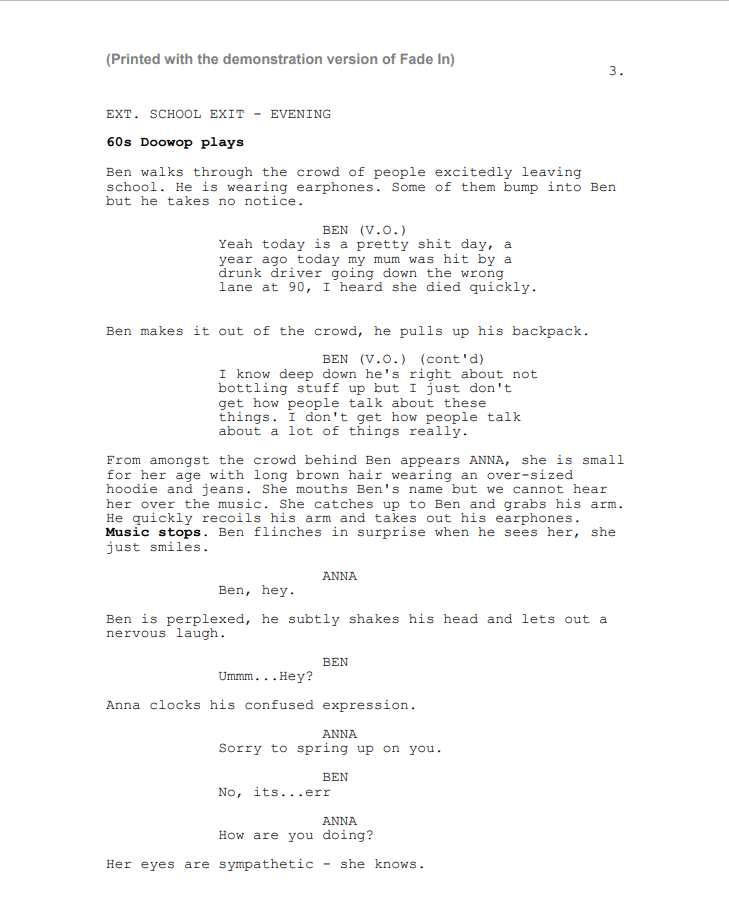
Draft Four
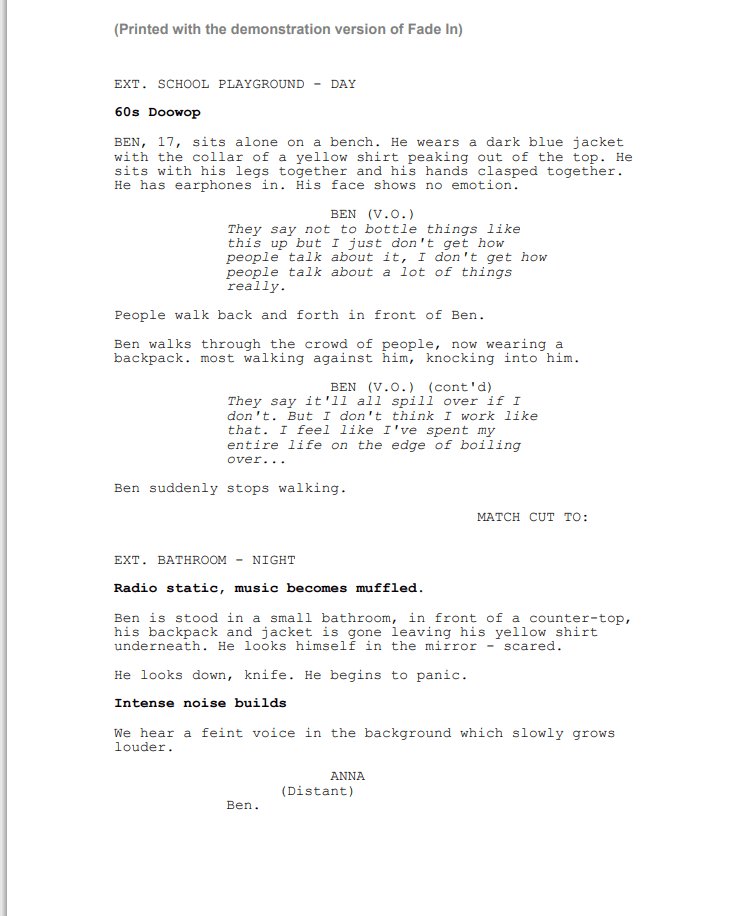
Analysis

Pros

Pretty much the entire objective of this draft was to economise, take what I had done in previous drafts and shrink it down to just the most necessary stuff. This meant getting rid of the therapist scene. What I did was actually take the end of the therapist scene and reword it into a monologue (I seemingly am unable to not write an inner monologue at the beginning) and, all things considered, I don’t hate it.

I also moved Ben’s vision slightly, I’m still toying with where to put it but I’m pretty sure it has the desired effect wherever it is placed in the opening scene.

I also changed it so that you would only find out Ben’s mother died right before Ben’s freak-out at the fire. I think this is a much better place to put it as the story can ride the impact of that reveal into a high intensity section, giving the whole scene a more natural pacing.

I again had to rework Ben and Anna’s conversation but for the most part it has stayed the same.

Changes needed

From a structural and efficiency point of view, I’d say this is the strongest draft and the only thing I really need to iron out is the clunky dialogue in the opening.

Since I wrote this draft I made the decision to make Ben an active protagonist so I’ll need to show that he is actively trying to fix his relationship with Anna and that, of course, needs to start in the opening scene so, in my next draft, I’ll have to completely redo their conversation.

Overall, I’m really happy with how the script is evolving and I’m looking forward to seeing what ends up being the final draft of this scene.

The Rom-Com

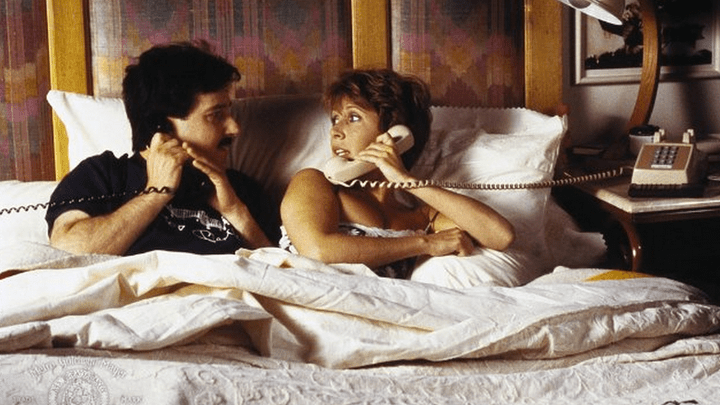
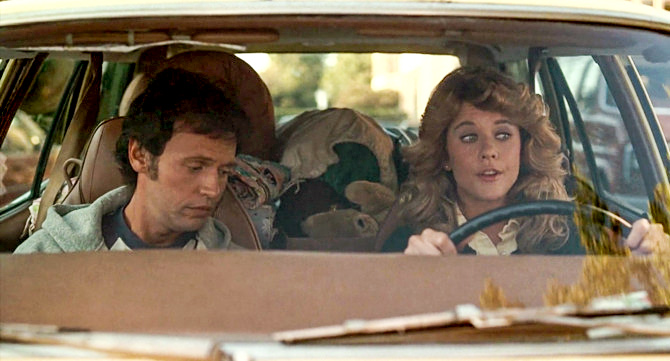
When Harry met Sally (1989)

This week, Mark Kermode released another installment of his brilliant ‘The Secrets of Cinema’ series in which he dissected the ever popular romantic comedy genre. As much as I am a fan of his series, I was filled with a sense of dread as I watched this particular episode as I knew it would inevitably lead to a piece of homework being set around rom-coms.

If you wish to watch the episode this task is based around you can find it on BBC iplayer or you can click the link here: https://www.bbc.co.uk/iplayer/episode/b0bbn5x8/mark-kermodes-secrets-of-cinema-series-1-1-the-romcom

Out of the options we were given I chose the first task, ‘Write a one-page synopsis of a lockdown rom-com with a classic story structure’

For the previous assignments we have been set on Mark Kermode’s series I have always felt confident that I have had a solid foundation of knowledge on the specific topic but when it comes to Romantic Comedies I leave a lot to be desired. Coupled with my youthful inexperience of romance I fear I am not readily equipped to write anything centered around the topic but I guess I’m going to have to give it a shot.

The most challenging aspect of this task, for me, was creating drama and conflict out of the lockdown scenario as my own experience of lockdown has been somewhat lacking in the drama department. To solve this problem I decided to include a love triangle in my story, a very common trope of the romantic comedy genre. This would help create conflict and tension between my characters no matter how boring their immediate situation.

A visual representation of how it feels to be in lockdown.

To get myself started on this task I headed over to the YouTube channel ‘Film Courage’ and watched their video ‘writing a romantic comedy masterclass’

I learned many things from this video (as I had an extremely limited knowledge of Rom-Coms before watching it) but the thing which immediately stuck with me was that romantic comedies are always driven by character as opposed to being driven by plot. So I figured the best thing to do was to start writing some characters.

Another issue with not having seen many romantic comedies is that I was at a loss for what sources to link my work to. With past assignments my first instinct was to take my favorite parts of similar films (such as my constant references to The Dark Knight and Iron Man in the Superhero task) and see what ideas I could come up with around those individual slices but with this task I knew I wouldn’t be able to do that and would have to come up with a story from scratch and pray it functioned as a rom-com, because of that I will not be including as many nods to popular culture as I normally do in this tasks but I’m sure one or two will creep in none-the-less.

Boy

Four Weddings and a Funeral (1994)

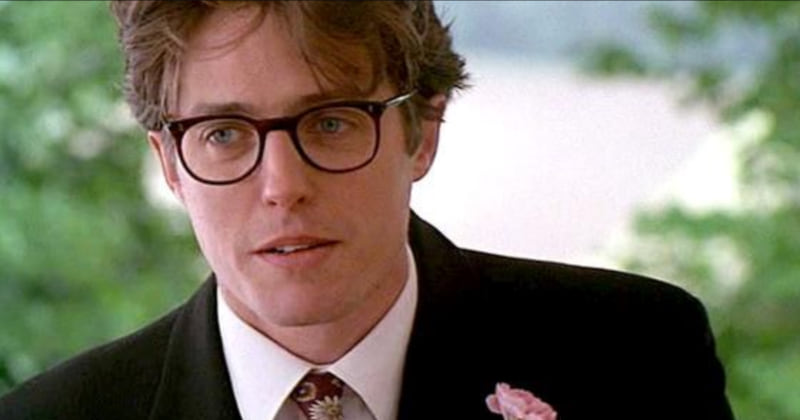
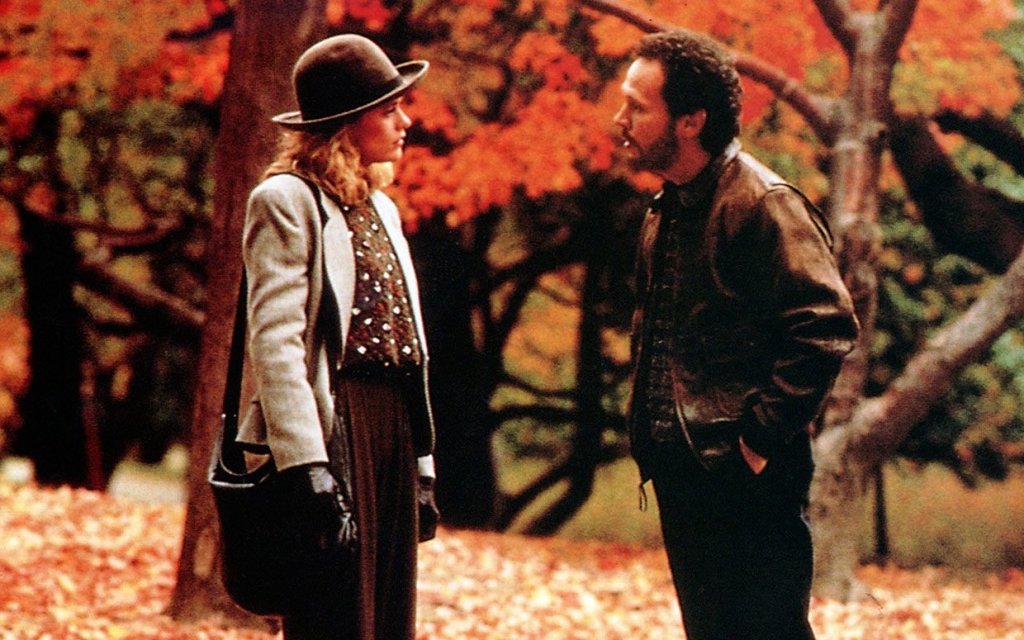
The first character I came to designing was Boy (I refer to him this way because, as I learned, many rom-coms follow the pattern: Boy has Girl, Boy loses Girl, Boy gets Girl back). The Boy in my story is loosely modeled off Hugh Grant’s character Charles in Four Wedding’s and a Funeral and Billy Crystal’s character Harry Burns in When Harry met Sally as those are two rom-coms I have actually seen, Because of this his name will be Charlie Burns.

Charlie will be your average rom-com protagonist, a ladies man, a womanizer. his strengths will be that he is bitingly intelligent and witty, subtly attractive and will give very little worry to any a situation. His flaws will be that he seems to be with a different woman every week, paying little care for their feelings and can never hold on to a girl once they realise how incapable he is of commitment. Of course, he will be painfully unaware that this is even an issue and will float from person to person feeling very pleased with himself. Because of this he has never truly felt a connection with somebody before and believes all relationships to merely be a means to sex with very little else to shout about, leading him to regularly cheat on the people he is seeing.

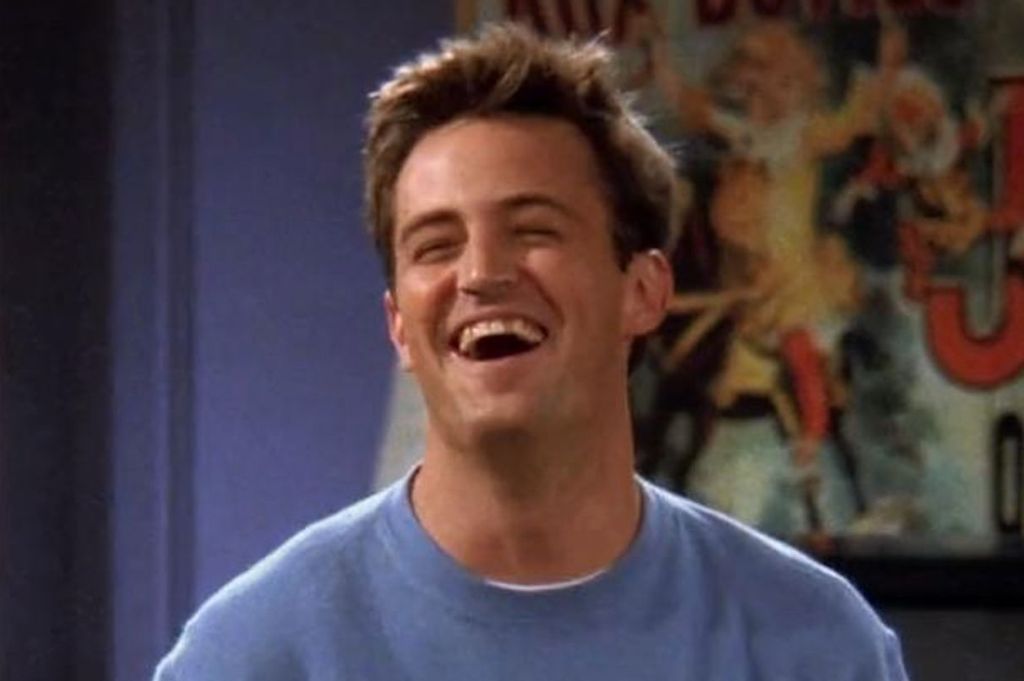
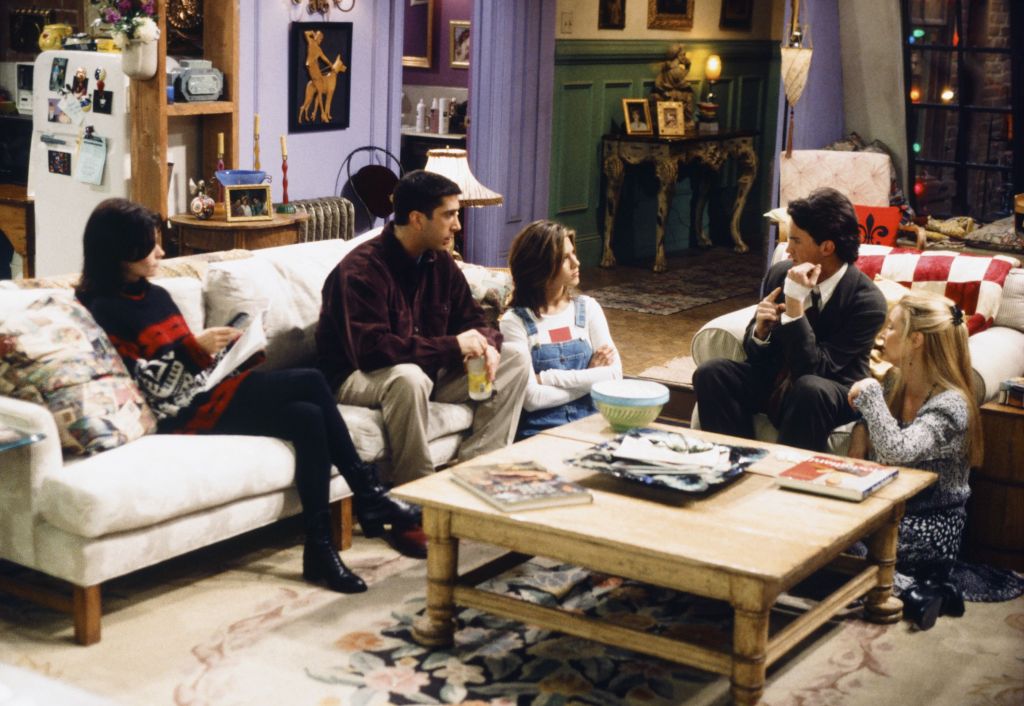
Charlie will have a very similar sense of humour to Chandler’s from Friends.

To summarize, he is very flawed. His need throughout the film will be to fall in love with love and let people connect with him on a real emotional level.

All the characters in my story will be in their early twenties and studying at Uni. I made this decision because I am currently watching BBC’s Normal People and many of my ideas came to me while watching that show, in which all the character are in their early twenties and studying at Uni.

Girl

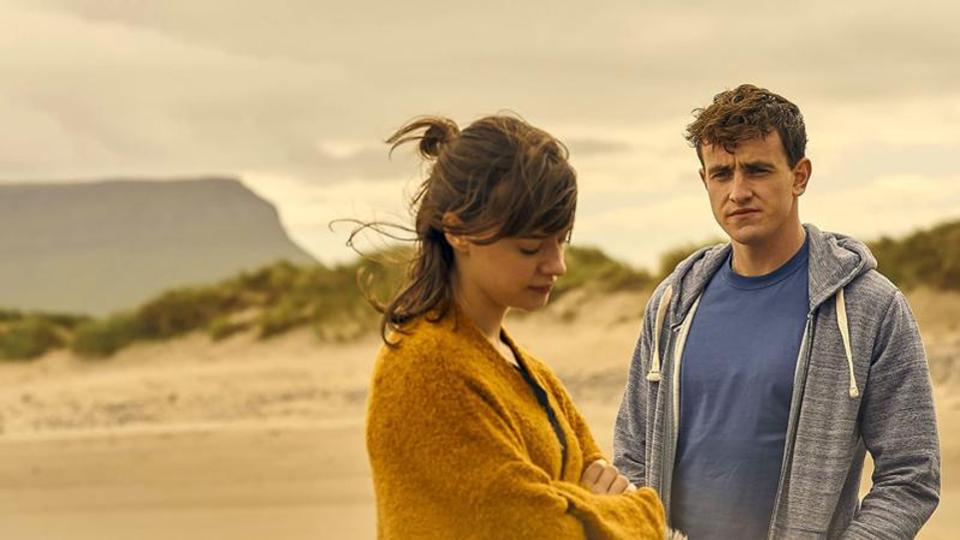
Funnily enough, the female protagonist in my story is actually inspired by both the male and female protagonist’s in normal people, Connel and Marianne.

Normal People (2020)

Like Connel, she will be very shy and timid on first encounter and will seem to always have her head in either a novel or a notebook. In Pamela Jaye Smith’s interview with Film Courage she mentioned many people who have written romantic books or screenplays together can sometimes develop feelings for each other as a result of getting caught up in their stories and I thought this was a lovely dynamic so, as a little nod to that, my female character will be writing a romantic novel in the story.

Like Marianne from Normal People, my character will be extremely intelligent and independent, being almost immune to Charlie’s charms. As a writer she will be obsessed with the intricacies of romance which will lead her to be appalled by Charlie’s attitude and views towards the subject.

Her main charter flaws are that she has very little real life experience of anything really, spending all her time dreaming up stories but never finding the time to live her own. As a bi-product of her obsession with ‘the perfect romance’ she will be very intolerant of her own flaws and the flaws of those around her leading to her being very self conscious and ending up in very unhealthy and shallow relationships.

This part of her psyche is represented through where she lives, in a very small fishing village on the coast of Scotland where she attends a small local Uni. A subplot in my film will be about her having to choose between staying in her village, hidden from the rest of the world, or moving to London to chase her dream as a writer.

I truly had no idea what to call my female character so I settled on Grace because why not.

Grace’s need will be to drop her demand for perfection and find the beauty in life’s imperfections, otherwise she will spend her whole life hiding in her stories and not truly appreciating life as it is.

Side Characters

Aside from Grace and Charlie, there will only be three other characters in the story.

George and Bethany

When Harry met Sally (1989)

In most of the rom com’s I have seen there tends to be a second couple in the film who act as mentor’s to the protagonist’s and also act as a bit of comic relief. They also tend to be quite a functional couple, something the protagonist can be envious of.

In my story those characters will be George and Beth, Charlie’s roommates. Their initial purpose in the story is to bring Grace and Charlie together. Beth will be a schoolmate of Grace’s and the two main characters will attend Beth’s 21st birthday at the start of the film, meeting for the first time there. George and Bethany will also act as mentor’s to our protagonists throughout and give some comic relief, standard stuff.

But, I will also include a sub-plot about how their relationship fares in lockdown, bringing its own conflict and resolutions to give the story another layer of depth.

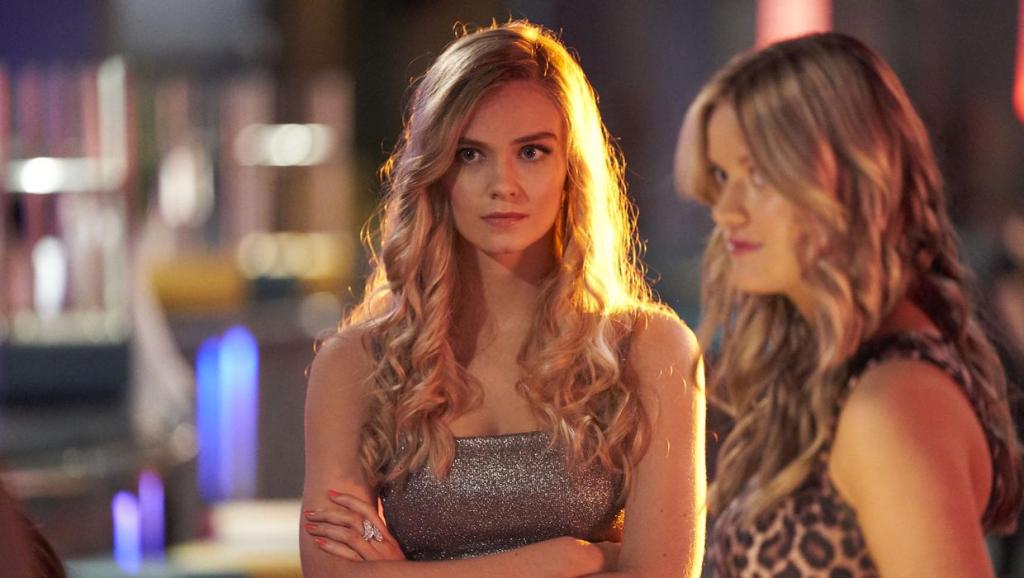
Rachel

Normal People (2020)

Rachel, the third part of Charlie and Grace’s love triangle. Rachel will actually be in a relationship with Charlie at the beginning of the story but like all of Charlie’s relationships it will be doomed from the start and the story will open with Charlie telling George and Bethany that he is going to break up with her. Aside from just serving the narrative purpose of adding conflict to the story she will always represent Grace’s need. Unlike Grace, Rachel will have a complete love for life and be a total free spirit. Her downfall will be that she has no real motivations in life and just wildly floats around from party to party without a care for the future. She will also be completely in love with Charlie and will try her best to prohibit him from breaking up with her, this will be especially difficult considering they are isolating seperatly from one another.

The Stakes

Another important thing I learned from the Film Courage interview is that a rom com has to have stakes involved, what will happen if Grace and Charlie don’t get together?

The stakes for Charlie is that he has lost all faith in love and without Grace he may never develop a real connection with a partner.

The stakes for Grace is that she is too afraid to embrace life and without Charlie she may spend the rest of her life in fear and choose not to move to London, setting back her dreams of becoming a writer.

In a way then, my story’s antagonist is my own characters’ fears, the fear of love and the fear of life.

Setting

Friends (1994-2004)

The great thing about having a film set in lockdown is that it will take place in very few settings. All of my characters will be University students so I figured I’d have them isolate together in Bethany’s apartment, all of them except for Rachel of course.

Charlie, George and Bethany will be isolating together because they live together and Grace will join them because lockdown is announced on the night of the party and it is impossible for her to get back to her remote Scottish village and Beth is the only person she knows in London.

Act One

The film will open on the night of the party and the night Charlie and Grace first meet. Through their conversations with one another we will learn the basics of their characters and also their needs: Charlie is a womanizer with no experience of love and Beth is an obsessive writer with very little experience of life. It is also revealed that Grace is in the middle of writing a novel. After having a lot to drink they end up sleeping together, something that isn’t particularly earth shattering for either of them and they wake up with the intention of going their separate ways and never seeing each other again.

I thought about having Charlie develop feelings for Grace at the start of the film but I decided it would be out of character and I really loved the fact that Harry and Sally hated each other at the start of their film so I knew I could get away with my two characters being indifferent towards each other at the start of mine.

When Harry met Sally (1989)

Act one ends after the audience discovers, through a conversation between George and Charlie, that Charlie is in a failing relationship with Rachel which he intends to end right before it is revealed to everyone that the country is going into lockdown and Grace will be living with Charlie and the others for the foreseeable future.

So the action is set up: Charlie has to break up Rachel while in lockdown, Charlie has to live with the girl he only saw as a one night hookup, Grace has to finish her novel, Charlie has to discover love and Grace has to discover life.

Act Two

Act two will follow the characters going about achieving these goals. Charlie will initially try to break up with Rachel over the phone but she will insist he has to do it in a gentlemanly way leading to a horror scene involving the break up from hell where the two characters are forced to obey social distancing laws despite very clearly wanting to break out into a fist fight.

Rachel will inevitably find out about Grace leaving her angry with Charlie. This will force Charlie to deal with the consequences of his actions for the first time in his life.

Rachel will struggle to find the inspiration to write while in lockdown (I wonder what inspired this) and, out of guilt, Charlie will offer to help her. This will bring the two character’s views on love to a head resulting in initial conflict. But by being forced to write about love they slowly grow fond of each other until Charlie makes the horrible realization he might be catching feelings.

At the same time, Charlie slowly opens Grace’s eyes to how ridiculous her demand for perfection is and how she needs to start embracing life before it is too late and they go on a number of lockdown appropriate adventures together to open her eyes to real life and, in turn, Grace begins to grow fond of Charlie, something she is shocked by as he is full of flaws and imperfections.

The rest of act two will be the two characters struggling with this constant change and having to decide whether they will embrace love and life or whether they will carry on with their lives as it was before.

Eventually they succumb to their feelings and begin a relationship but it is soon cut short by lockdown ending and Grace going back to Scotland.

Act three

Act three jumps through time quite quickly, Charlie and Grace try a long distance relationship but it doesn’t work out and they go their separate ways. Despite this, they have helped each other achieve their needs and when we jump two years into the future we see that Charlie is now in a very happy relationship and Grace is celebrating the success of the novel she wrote in lockdown, she is also now living in London. The two characters meet in the street, Charlie with his love and Grace with her life, they exchange a smile, and walk past each other.

I chose this ending because the homework stated we needed to add a twist and what is a better twist in a rom-com than the characters not actually getting together?

I like this ending because, despite not getting together in the end, both characters help the other achieve their need leading to a fairly satisfying conclusion (in my opinion).